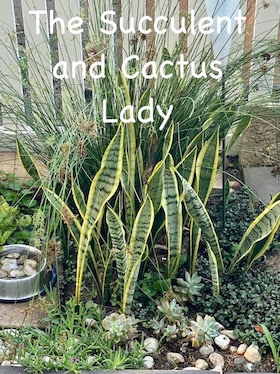
About me
🌿 I've been gardening ever since a child, when I spent time with my father in his vegetable garden. But my fascination with Echeverias started in the 1980's, when my father gave me a pot with five Echeverias, which turned out to be E. imbricata. At first I wasn't much interested in them and planted them in some obscure corner of the garden and completely forgot about them. How great was my surprise when, a couple of months later, I noticed that they had spread and made a beautiful display - I was hooked!
Pages
Showing posts with label echeveria glauca. Show all posts
Sunday, 28 December 2014
Echeveria imbricata. Flower
Echeveria imbricata is a species of flowering succulent in the Crassulaceae family, native to semi-desert habitats in Mexico. Also known as the Mexican Snowball, this frost-tender succulent rewards with lots of beautiful flowers when it gets enough sun and water.
With striking colour and texture, this fast growing Succulent is a great choice for ground-cover or a rock garden. Tight blue-grey rosettes freely produce offsets to form dense mounds. Bright pink blooms on tall stems are adored by hummingbirds and, in South Africa (we don’t have hummingbirds) Sunbirds and insects. Attractive in containers or as a house plant.
.
Labels:
echeveria glauca,
flower,
succulent,
succulents
Sunday, 9 November 2014
The wonder of Echeverias
It is only when we are aware of the earth
and of the earth as poetry that we truly live.
- Henry Beston, 1935, Herbs and the Earth
I’ve been absent from the world, lost in the beauty of my sunny front-yard garden. Too much work, a whole lot of plants, and life goes on. And the Echeverias (E. glauca) are flowering! A sure sign of mid-summer and lots of rain.
The Genus Echeveria is a member of the Crassulacae family and are natives of Latin America — specifically Argentina and Mexico. There are around 150 species and they are a wonderful succulent to have in your collection.
Echeveria glauca, my personal favourite, also called "Hen and Chicks", is one of the most popular. E. glauca is desirable for its blue-green colour, attractive arrangement of foliage, for their hardiness and their colourful, bell-shaped flowers on pink stems in early summer. Break them off when blooms have faded, this encourages more flowers.
They are one of the easiest succulents to grow indoors where a sunny window is a perfect spot for them. But be careful of too much direct sun through the glass as this can burn them. During summer and spring water them regularly, reducing watering in winter.
For me, growing them outdoors is a total struggle. E. glauca prefers average summer temps of 18ºC - 21ºC (65ºF - 70ºF). and in winter, cool to 10ºC (50ºF). In summer, the temperature here in Tarlton often exceeds 30ºC. And even though our winter temperatures rarely dip below 10ºC, we get a particularly bad frost that doesn't kill them but stunts their growth, making it harder for them to recover in summer. This little feature no longer exists as I had to lift them all and plant in pots.
They need a well-drained soil and our soil tends to compact quickly and become as hard as rock, even with lots of compost and sand added.
So slowly, as the years have passed, I've taken them out of the garden and put them in pots, baskets and anything else I can lay my hands on.
One can see the difference in the Echeverias that get brought in for the winter and those that stay outside.
Echeverias spread by making pups (babies), which can be harvested and re-planted but are easily propagated by taking a cutting (or by a leaf for the most of them). Besides propagation from leaves, if the main stem of the Echeveria becomes long and bare, you can cut the rosette off, let the wound dry for a week or so, and re-root the rosette. An expert recommends suspending the rosette just barely out of reach of a layer of growing mix. The rim of the pot can act as support. The rosette will send roots reaching down towards the mix. When you see a good amount of roots, it's ready to plant in the soil.
CULTIVATION TIPS
Most Echeveria are summer growers. Once established they can tolerate extended dry periods without watering but will grow stronger if they receive adequate water during their growing season. Free draining, porous soil is essential to prevent root rot. Echeveria are shallow rooted plants and therefore benefit from good levels of organic matter in the soil. Good ventilation is important for minimising pest and disease risks. Mealey bug and aphids find them irresistable so regular drenching with a suitable pesticide during the warmer months is advised - use Neem Oil which works well and is 100% organic. Generally, the more sun they get the better they will display their colours and shape, but protect them from excessive sun during hot weather.
All pics taken in my garden (Tarlton, Gauteng, South Africa).
And here are some lovely ideas I found on the internet for displaying your Echeverias and other succulents :
::
Wednesday, 13 August 2014
Flowers of the Echeveria imbricata
Camera : Canon EOS 550D
Taken in my garden (Tarlton, Gauteng, South Africa)
Echeveria imbricata is one of the most popular and beautiful succulents in the Crassulaceae family, native to semi-desert habitats in Mexico. They are not as frost-hardy as some other succulents and I bring mine in every winter. They used to be spread all over my garden, but after almost losing most of them, I transplanted them into various containers and now they are thriving like never before.
::
Saturday, 2 August 2014
Monster Echeverias
My Echeverias (E. glauca) responded in the most amazing way to all the rain we’ve had last summer, many days as much as 100mm – some are as big as saucers and, this one in particular, as big as a dinner plate.
These beautiful and varied tender succulents are not frost hardy. However, their ability to withstand drought is unsurpassed. Yet they thrive when given a lot of water. Originating in hot desert conditions in Mexico and South America, there are still new species being discovered today. The hybrids that we know and love are easy to grow and propagate, which only encourages that urge to acquire more.
Watch out, these plants are very addictive!
In winter they have now taken on a more blueish hue...
::
Sunday, 27 April 2014
Echeverias thrive on Love and pampering
These Echeveria imbricata have virtually trebled in size! I took from the garden a selection of Aloes, cacti and succulents and transplanted them into a wooden box and I brought it into the house for over-wintering last year. They’ve all thrived so much that I didn't plant them back outside in Spring but kept them in the wooden planter on my patio. It’s amazing what a bit of love and pampering does!
::
Monday, 10 March 2014
Echeveria beauties
At
the onset of Autumn, Echeveria imbricata does this wonderful thing of turning pink
on the tips of its leaves. The flowering period is almost finished now and soon
it will be time to move them to their over-wintering spot in my flower room.
These lovely succulents, hailing from Mexico, cannot withstand the severe frost
we get in our area.
Echeveria
is a large genus of succulents in the Crassulaceae family, native from Mexico
to North-western South America. Many of the species produce numerous offsets,
and are commonly known as 'Hen and chicks', which can also refer to other
genera such as Sempervivum that are significantly different from Echeveria.
Many
Echeveria
species are popular as garden plants. They are drought-resistant, although they
do better with regular deep watering and fertilizing. Although they tolerate
winter quite well, the winter frost here in Tarlton is quite severe and often I
take them out of the garden, putting them into pots and bringing them into the
house, especially those that have got long stems and are not compact and dense
any more.
Profuse flowering and large rosettes after plenty of rain
::
Subscribe to:
Posts (Atom)