About me
🌿 I've been gardening ever since a child, when I spent time with my father in his vegetable garden. But my fascination with Echeverias started in the 1980's, when my father gave me a pot with five Echeverias, which turned out to be E. imbricata. At first I wasn't much interested in them and planted them in some obscure corner of the garden and completely forgot about them. How great was my surprise when, a couple of months later, I noticed that they had spread and made a beautiful display - I was hooked!
Pages
Showing posts with label mother in laws tongue. Show all posts
Friday, 21 April 2023
Sweeping your mind
"When you sweep the garden, you are sweeping your mind."
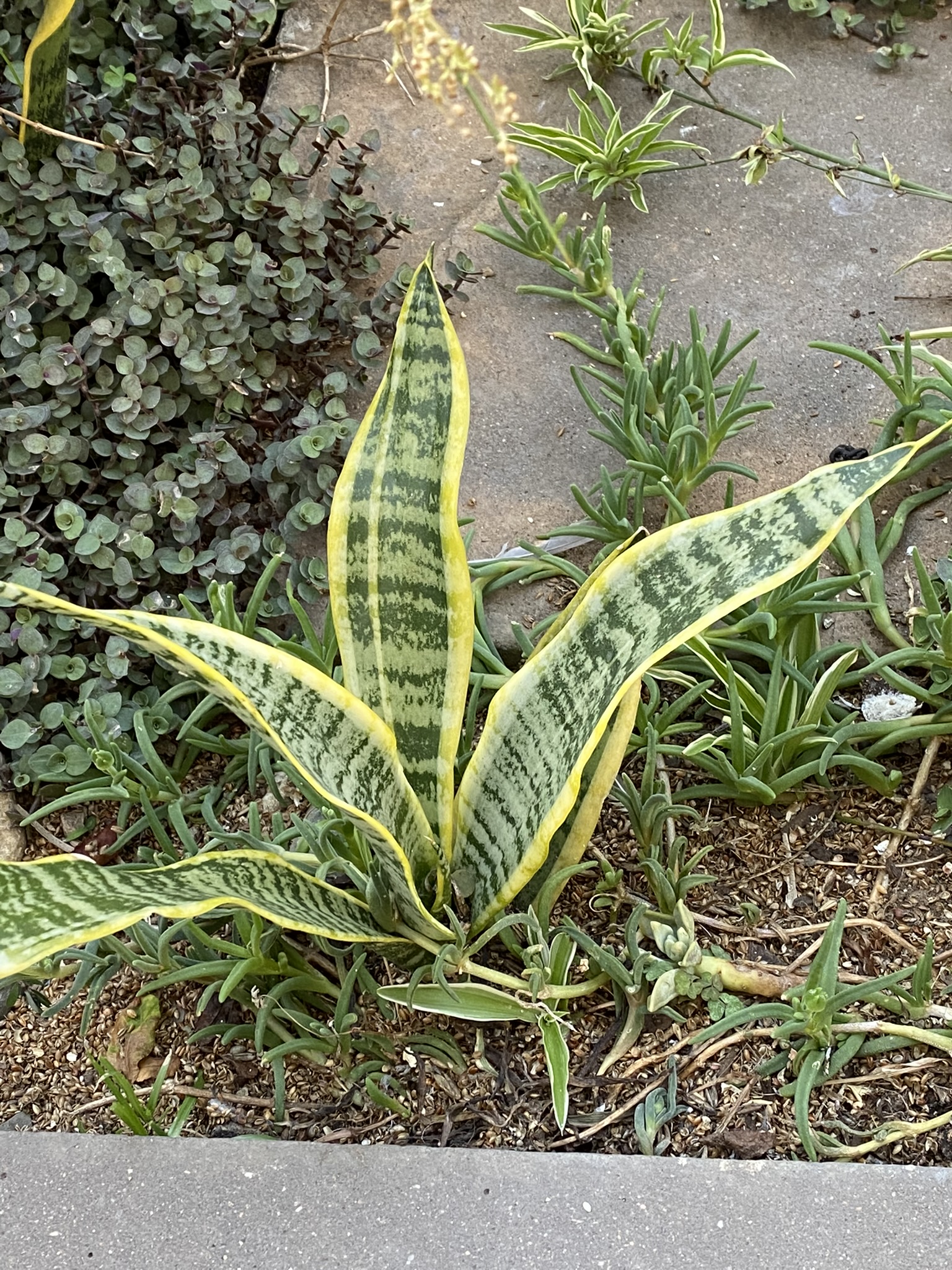
A daily chore, sweeping the garden, as feeding my feathered friends leaves a big mess of left-over seeds and husks. But the Sansevieria (Mother-in-Law's Tongue) doesn't seem to mind all the husks and the Callisia repens is absolutely flourishing! And all the left-over seeds that blow into the garden germinate and come up all over, providing extra sustenance for the birds as they absolutely love all the fresh greenery! So unless you don't mind some "untidy" looking beds, better to feed your birds further away from your prized beds.
Tuesday, 29 March 2022
Sansevieria, a feng shui favourite
Mother-in-Law’s Tongue or Sansevieria trifasciata is native to Asia and Africa. Snake plants (Sansevieria) have a number of health benefits. They filter indoor air, remove toxic pollutants, may help boost mental health, are easy to care for, are effective against allergies and may help enhance the “energy” of a space, according to feng shui, therefore they are ideal in the bedroom.
In the garden they thrive in full sun as well as partial shade and quickly spread through rizomes. They are also great in pots indoors or on the patio.
::
Saturday, 31 July 2021
My new little patch of Sansevieria
Good morning!
My new little Sansevieria patch. You just gotta love Mother-in-Law’s Tongue!
This is Sansevieria trifasciata (also known as snake plant), native to South Africa, drought-resistent, tolerates low light but this one also just loves the sunlight!
Wednesday, 12 December 2018
Mother-in-Law's Tongue
Have you ever seen Mother-in-Law's Tongue flowering? Well, here it is! (Sansevieria trifasciata).
Also known as the Snake Plant, it this lovely feature plant is easy to propagate and looks great planted en masse in the garden or in pots on the patio or in your home. They thrive in in both bright and low light areas.
As a houseplant, it does best in bright light but handle low light levels indoors as well. Outdoors bright light to full sun. Handles dry and poor soil conditions but appreciates good well-drained soil inside or outside. Lightly fertilize with a liquid 20-20-20 fertilizer 1/2 strength. DO NOT over-water or over-pot. Temperatures below 4℃ may cause damage to leaves. Relatively pest free.
Sunday, 24 January 2016
Mother-in-law's tongue
W&N watercolour on Bockingford 300gsm
A watercolour sketch of Mother-in-law’s Tongue (Sansevieria trifasciata laurentii) in a pot.
Indigenous to South Africa, it is also known as the Snake Plant. It is a truly remarkable and striking easy care house plant native to tropical West Africa from Nigeria east to the Congo. I remember my dad having one on a windowsill in our house, where it stood for absolutely years without any seemingly extra care. The modern trend in the average home is to keep the plant separate from others and have it standing bold and alone.
Summer growers. As with all succulents, Sansevierias require a well-drained mix and moderate watering. Water frequently during the warmer months and keep fairly dry through winter. To maintain their best shape and colouration they are best grown in dappled sunlight. Grows up to 3 or 4 feet tall.
Propagation is by division or leaf cuttings. Sansevieria is easy to divide because it has shallow roots. Simply turn the pot on its side and pull out the entire plant. Use a sharp knife to cut through the thick roots and pot each clump separately. To propagate Sansevieria by leaf cuttings, cut leaf into 2-inch (5 cm) pieces and place them right side up (the way they were growing) in moist perlite or cactus potting mix.
Indigenous to South Africa, it is also known as the Snake Plant. It is a truly remarkable and striking easy care house plant native to tropical West Africa from Nigeria east to the Congo. I remember my dad having one on a windowsill in our house, where it stood for absolutely years without any seemingly extra care. The modern trend in the average home is to keep the plant separate from others and have it standing bold and alone.
Summer growers. As with all succulents, Sansevierias require a well-drained mix and moderate watering. Water frequently during the warmer months and keep fairly dry through winter. To maintain their best shape and colouration they are best grown in dappled sunlight. Grows up to 3 or 4 feet tall.
Propagation is by division or leaf cuttings. Sansevieria is easy to divide because it has shallow roots. Simply turn the pot on its side and pull out the entire plant. Use a sharp knife to cut through the thick roots and pot each clump separately. To propagate Sansevieria by leaf cuttings, cut leaf into 2-inch (5 cm) pieces and place them right side up (the way they were growing) in moist perlite or cactus potting mix.
I don't have one of these plants, so getting one is next on my list!
.
Subscribe to:
Posts (Atom)