About me

About me
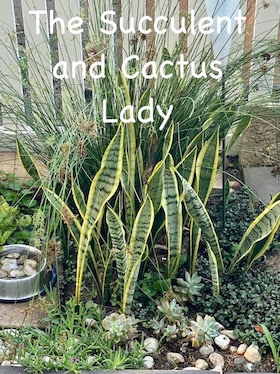
🌿 I've been gardening ever since a child, when I spent time with my father in his vegetable garden. But my fascination with Echeverias started in the 1980's, when my father gave me a pot with five Echeverias, which turned out to be E. imbricata. At first I wasn't much interested in them and planted them in some obscure corner of the garden and completely forgot about them. How great was my surprise when, a couple of months later, I noticed that they had spread and made a beautiful display - I was hooked!

Monday, 1 February 2016

Aloe aristata


Aloe aristata (Guinea-fowl Aloe, Lace Aloe) is a species of evergreen flowering perennial dwarf aloe in the family Xanthorrhoeaceae, from South Africa. It is commonly cultivated as a garden plant around the world. It prefers well-drained soils, but can tolerate a range of rainfall systems. It can also tolerate temperatures down to -7°C, due to its adaptation to cold mountain tops. However it may need to be grown indoors or under glass in extremely cold temperate regions, to give it some winter heat. This clumping species readily produces large numbers of off-sets, which can be separated and planted as a means of propagation.

My original Aloe aristata now with lots of pups

It is easily identified by the white markings on its leaf surfaces and the thin pointed leaves. Aloe aristata has no papery bracts along the peduncle, a characteristic it does not share with other dwarf aloes.
When not flowering Aloe aristata is often mistaken for a Haworthia specie.

Plants are stemless and form clumps of up to twelve rosettes that are between 100mm and 150mm in diameter.

My Aloe aristata flowered for the firs time this last spring and I was absolutely ecstatic!

Light: Light-shade to full sun.
Watering: Will tolerate slight over-watering and drought conditions.
Flower: Flowers are a dull-red or pinkish colour, tubular in shape and slightly curved down at the end of a fairly long stalk. Plants flower during the month of November.

I've been bringing mine in every winter, but I have quite a few now, propagated from the pups, and I'm considering leaving one or two outside for this coming winter to see how they react.

Aloe aristata sharing an enamel bowl with some peanut cactus and an Haworthia


::

Sunday, 24 January 2016

Mother-in-law's tongue

W&N watercolour on Bockingford 300gsm
 
A watercolour sketch of Mother-in-law’s Tongue (Sansevieria trifasciata laurentii) in a pot.

Indigenous to South Africa, it is also known as the Snake Plant. It is a truly remarkable and striking easy care house plant native to tropical West Africa from Nigeria east to the Congo. I remember my dad having one on a windowsill in our house, where it stood for absolutely years without any seemingly extra care. The modern trend in the average home is to keep the plant separate from others and have it standing bold and alone.

Summer growers. As with all succulents, Sansevierias require a well-drained mix and moderate watering. Water frequently during the warmer months and keep fairly dry through winter. To maintain their best shape and colouration they are best grown in dappled sunlight. Grows up to 3 or 4 feet tall.

Propagation is by division or leaf cuttings. Sansevieria is easy to divide because it has shallow roots. Simply turn the pot on its side and pull out the entire plant. Use a sharp knife to cut through the thick roots and pot each clump separately. To propagate Sansevieria by leaf cuttings, cut leaf into 2-inch (5 cm) pieces and place them right side up (the way they were growing) in moist perlite or cactus potting mix.

I don't have one of these plants, so getting one is next on my list!


.


Friday, 1 January 2016

Wishing you a simple 2016!

Euphorbia pseudocactus

If it were only all about organizing, spending less money, de-cluttering, or removing objects for the sake of simply owning less stuff, I would never have considered adopting simple living.

Take pleasure in the things you already have or want to buy. Living a simple life doesn't mean you can't appreciate beauty or own beautiful things. Be awed by the beauty and exquisite craftsmanship of your R10,000 handbag, and appreciate the painstaking hours it took to cultivate your magnificent cactus. The point is to remove all the extraneous stuff so that you can have the space – literally and figuratively – to focus all of your energy on the things that you value the most - your succulents!

Happy New Year and here's wishing you a simple 2016 filled with JOY, LOVE and HAPPY HOURS OF SUCCULENT GARDENING!

.

Monday, 28 December 2015

Hatiora gaertneri (Bladroos)


A native of south-eastern Brazil, Hatiora gaertneri (also known as the Easter Cactus) is a tropical cactus that requires a certain amount of regular water in order to survive. The fully grown cactus resembles a shrub. In the wild, these cacti grow on trees or rocks only, so they require a special potting mixture to keep them healthy in your home.

Immediately after flowering has finished, this cacti requires a one month resting period. During this month, restrict water to keep the soil moist only, and do not offer fertilizer. After the month, resume watering and fertilizing on a regular basis.
- Name kindly supplied by Roger - (Info from House Plants Expert)


At the beginning February 2014, a friend sent me a cutting (above) and after being "lost" in the post for almost a month, it finally arrived on the 26th February 2014, looking slightly worse for the wear. I immediate potted it up and waited. To my utter horror, it seemed to die within a couple of weeks! I left the "dead" looking plant in the pot, carefully pampering it and keeping an eye on it and it wasn’t long before, to my utter delight, new stems started to emerge (below).


 By this time the cold weather was starting to settle in so, as a precaution, I brought my precious little epiphyllum indoors, to spend the winter safely in my flower room inside.


Then in September, as soon as it was warm enough, I took it back outside and within a week I was promptly rewarded with a couple of flowers.

Litrosies of bladrosies se blomme is verskillende groottes en so ook die stammetjies of takkies. Mens kry dié met die lang aaneenlopende blare wat aan die kante gekartel is, en hul dra gewoonlik die groot blomme. Sommige lyk nogal na orgideë en kom in al die kleure van ligroos, rooi tot geel en oranje voor. Sommige blommetjies het ook dubbel blaartjies en die buitenste is byvoorbeeld rooi en die middelblaartjies wit of ligroos. Die ander litroos is die kleiner tipe met die ballerina blommetjies. Die plant se blare is in litjies aanmekaar en die blommetjies is kleiner. Hierdie blommetjies het ook dubbele blaartjies met verskillende kleure aan een blommetjie. Daar is ook die gewone ou rooietjie wat enkelblommetjies dra met sy geel stuifmeeldrade. Hierdie is nogal ’n baie sterk plant. Hulle groei maklik van steggies en groei ook baie vinnig en blom ook sommer vinnig. Al behoort hulle aan die kaktusse, hou hulle nogal in die warm somer van genoeg water. Hulle is wel gevoelig vir baie koue en ryp. Hul kan in volson of semi-skadu geplant word en sal oral baie goed blom.

::

Thursday, 24 December 2015

The happiest season of all!


Christmas, and summer time. Everything is in full flower. Surely it must be the happiest season of all! Here's wishing you a Merry Christmas and a festive season filled with LOVE, JOY and INSPIRATION!

Saturday, 19 December 2015

The joy of succulents in pots


Although succulents and cacti and are renowned for their 'easy care' and drought and heat tolerance, many succulents you may have in your garden might not be suited to your specific climate - some may prefer little water, some may thrive on lots more water, some may even prefer the shade and many might not be tolerant of too much cold or heavy frost.

Echeveria imbricata - doesn't tolerate frost and thrives on lots of water

That is the situation I have with many of my succulents. Here where I live (in Tarlton, Gauteng, South Africa), we can have winters with extremely heavy frost. Even though we rarely experience temperatures below -2℃, which most succulents do not have a problem with, I have lost many an Echeveria because of the frost at temperatures well above freezing.

Another problem is the beautiful, rich, deep topsoil l have in my garden. That brings it's own set or problems - the soil is extremely porous and well-drained and even heavy rain tends to sink right down to well below where the plants can get hold of it (most succulents and cacti have very shallow root systems).

The joy of having your succulents in pots is the fact that you can control temperature by moving them either into the sun or into shade, you can tend to each one's water requirements separately and, if your pot is well-drained, even over-watering is hardly ever a problem. It's wise to pot your most precious and rarer succulents, ensuring that you may enjoy their beautfy for many years to come.

Shade- and water-loving Crussula imperialis

Echeveria imbricata in Terracotta pots that are easy to move under cover for winter

A young Aloe ferox starting its life in the safety of a pot, avoiding frost in the early years

Euphorbia cooperi (Transvaal candelabra) which I raised from a baby but lost one winter because I forgot to being it inside. It is mostly found in wooded grassland and rocky places from KwaZulu-Natal, through Swaziland and up to Messina in Limpopo, all basically frost-free areas.

Keeping my Austrocylindropuntia subulata (Eve's Needle) in a pot, reduces the chances of this weed-like opuntia spreading all over the garden

This Cactus trichocereus echinopsis hybrid is in a pot just because he's so beautiful and I love to look at him!

Echeveria imbricata thriving in dappled shade on my patio with protection from the frost from some overhanging branches

An Haworthia, some Aloe aristata (Guinea-fowl Aloe or Lace Aloe) and Peanut Cactus in an enamel bowl on my patio table. I often use some of my potted succulents as centre pieces for breakfast or lunch parties.

::

Sunday, 4 October 2015

Kalanchoe rotundifolia (Haw.) Haw.


Family: Crassulaceae

Common names: Common Kalanchoe, Nentabos, Plakkie (Afrikaans) and umadinsane (Zulu).
.


Kalanchoe rotundifolia is a brittle succulent plant which grows up to 1m tall under favourable conditions. It is a common, orange-flowering species with a slender stem. It has fleshy, rounded or lobed leaves that are 2.5cm broad and are clustered at the base of erect stems. It must be noted that some of these plants, although with the species name rotundifolia, have leaves that are not round. They were grouped together because they had other similarities. The genus Kalanchoe typically has a tubular flower. Flowers are borne in an inflorescence with a long erect stalk. The flat-topped inflorescence consists of yellow or orange flowers and often become red and conspicuously twisted when old. The flowering period occurs through autumn and early winter (February until June).
.


It is a delightful little plant that puts up a brave show in clumps among trees and shrubs. The robust red flowering specimens are rewarding garden plants, flowering for many weeks. Kalanchoe rotundifolia is traditionally used by the Zulu as a charm to make one invisible.

A few Kalanchoe rotundifolia cuttings in a plastic tub to the right of the basket

This is an easy plant to propagate from both seed and cuttings. The seeds of these plants are very fine and must be collected as soon as they are ripe before they disperse. The best time to sow these seeds will be early spring in order to give them plenty of time to grow before late autumn. Sowing may be done either in seedling containers or directly into the garden.

Ideal cuttings for propagating are semi-hardwood and soft tip cuttings. Cuttings should be planted into river sand and there is no need to apply root-stimulating hormones. Each leaf is capable of producing a new plant when it drops to the ground. The rooted cuttings or seedlings must be planted in dry, shady conditions.


This is a good plant for a low maintenance and waterwise garden. In summer rainfall regions there is no need to water as rain will be sufficient. Kalanchoe rotundifolia will successfully seed itself in the garden and once it is established it will persist for many years.

This plant is a danger to livestock, notably goats and sheep, as it contains the same or similar poisonous substances as the Cotyledon species that cause loco disease or nenta.

My mother plant from which I've taken several cuttings and they are now spread all over the garden.
Plant Kalanchoe rotundifolia in light shady areas, in the shade of plants or in a sunny spot that gets at least some shade. These plants are particularly attractive when they show up in odd places in the garden and are very useful in the wild garden. They will grow in almost any soil as long as it is well-drained. Too much water and shade will hinder flowering. - See more at: http://kumbulanursery.co.za/plants/kalanchoe-rotundiflora#sthash.SbLj5cMK.dpuf

Kalanchoe rotundifolia is indigenous to South Africa and widely distributed in South Africa and Zimbabwe.

.

Thursday, 24 September 2015

Earth's little gems - Gasteria glomerata

My newly-acquired Gasteria glomerata on the left sharing a pot with Huernia longituba


I acquired my Gasteria in February this year (2015) by way of an on-line auction on FaceBook and after winterizing inside my house for two months, I was thrilled to discover a small! flower soon after I put it outside at the beginning of spring. I juts can't wait to see it fully open!


Gasteria glomerata is a stemless, compact succulent plant with an unspotted but slightly roughened grey-green leaf surface. Leaves grow in a single line (distichous), but the plant clumps up freely to make a mat. Already I see a baby peeping through on the left! It is native to the Eastern Cape of South Africa.
.


G. glomerata is a rare endemic confined to the lower Kouga River, now part of the Kouga Dam. Although it is rare, its status is not threatened at all due to its cliff face habitat and it is protected within a reserve. The seed is also dispersed world-wide and the plant is commonly grown in many collections. Its ease of propagation ensures that it is not necessary to collect plants from the wild.

The terrain of Gasteria glomerata is rugged, inhospitable and the plants occur on sheer, vertical, shady, south-facing rocky ledges (altitude 500-700 m), in minerally poor, slightly acid quartzitic sandstone soils. Gasteria glomerata is pollinated by sunbirds. Its fruiting capsule, opens from the top to release the flattish seeds. The fleshy leaves store water and are therefore drought tolerant, making this an ideal water-wise garden plant. Even though its habitat on the cliffs is very exposed, and is bone dry at times, the plants receive enough water from seepage for survival.
.


It is popular due to its horticultural value, and can be grown in small containers or in succulent plant gardens and is easily propagated from leaf cuttings or seed. It is a slow growing, but long-lived species. Leaf cuttings should first be allowed to dry and heal by placing them on a cool windowsill for at least three weeks. The basal part should preferably be treated with a fungicide. Plant the leaves in an erect position or lying on their side in sandy soil. Rooting is rapid and young plants can be harvested the following season.

.
Related Posts Plugin for WordPress, Blogger...